
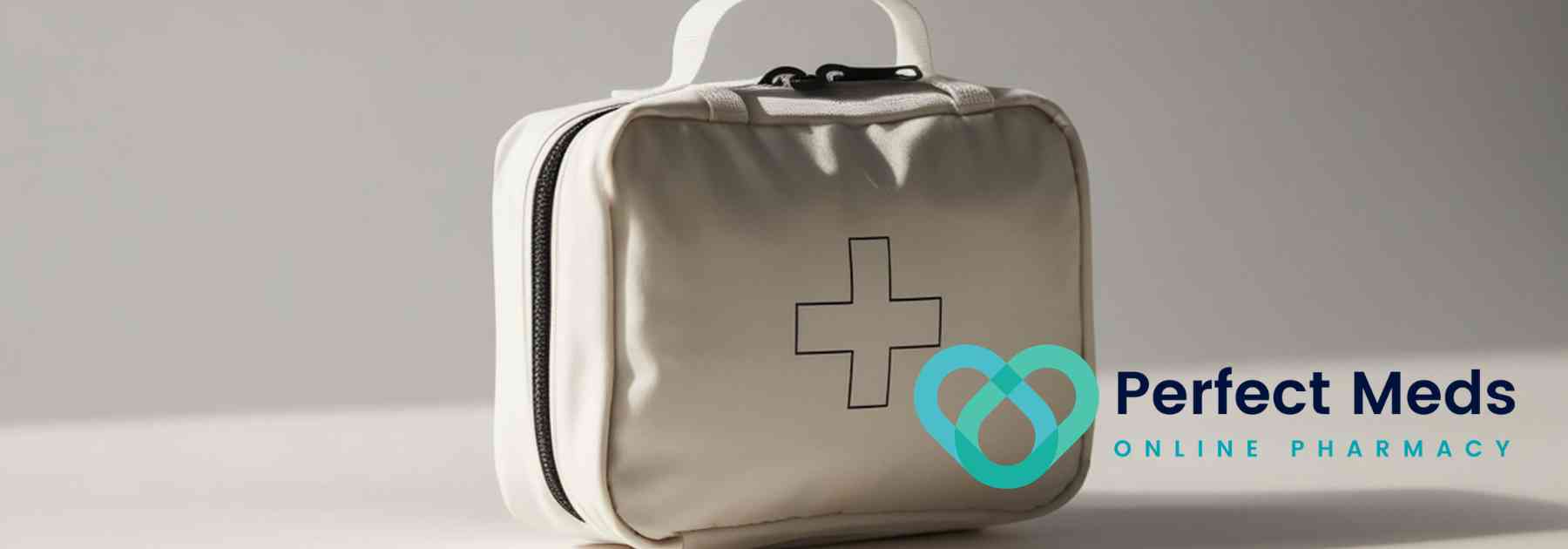
A well-stocked travel first aid kit should contain a core set of essentials that covers wound care, pain relief, gastrointestinal illness, and any personal prescription medications you require — with additional items added depending on your destination and the activities you are planning. At a minimum, every traveller should pack plasters, antiseptic wipes, a thermometer, rehydration sachets, and basic over-the-counter medications for pain and stomach upsets. Travellers heading to remote destinations, tropical regions, or areas with limited access to medical care are strongly advised to carry a more comprehensive kit that includes prescription medications. Perfect Meds pharmacists are experienced in helping travellers build a first aid kit that is truly personalised to their destination and health requirements, giving you complete confidence that you are prepared for whatever your trip may bring.
Book a consultation with Perfect Meds today.
Key takeaways
- Every travel first aid kit should contain wound care essentials, pain relief, anti-diarrhoeal medication, oral rehydration salts, and any personal prescription medications, as a minimum baseline regardless of destination.
- The contents of your kit should be tailored to your specific destination, planned activities, and the availability of medical care at your travel location; a beach holiday in Europe requires a very different kit to a trek in a remote tropical region.
- Prescription medications such as antibiotics for traveller’s diarrhoea, antimalarials, and altitude sickness medication can be added to your kit following a travel health consultation with a pharmacist or GP.
- Travel first aid kits should be kept in your hand luggage where possible so that essential items are always accessible, and any liquid medications must comply with airline restrictions on liquids.
- Checking and replenishing your travel first aid kit before every trip is essential; medications expire, supplies run out, and your health needs may change between journeys.
- A travel health consultation is the most effective way to ensure your first aid kit is complete and appropriate for your specific itinerary, particularly for travel to high-risk or remote destinations.
Why Every Traveller Needs a Travel First Aid Kit
No matter how carefully you plan a trip, illness and injury can happen unexpectedly — and when they do, having the right supplies to hand can make a significant difference to how quickly and effectively you are able to manage the situation. In many popular travel destinations, pharmacies may be difficult to find, may not stock the brands or formulations you are used to, or may require a local prescription for medications that are available over the counter in the UK. In more remote areas, medical facilities may be hours away, making self-treatment of minor injuries and illnesses not just convenient but essential.
A travel first aid kit does not need to be large or heavy to be effective. A carefully curated selection of the right items — tailored to your destination and personal health needs — can fit comfortably into a small pouch and be carried in your hand luggage throughout your trip. The key is preparation: knowing what you might need before you travel, rather than trying to source unfamiliar medications in an unfamiliar country when you are already unwell.
The Essential Items for Every Travel First Aid Kit
Whilst the ideal contents of a travel first aid kit will vary depending on your destination, there is a core set of items that every traveller should carry regardless of where they are going. The table below provides a quick-reference guide to the essential categories and recommended items for a well-stocked travel first aid kit.
| Category | Contents | Priority |
|---|---|---|
| Wound Care | Plasters (assorted sizes), sterile gauze pads, adhesive tape, antiseptic wipes, antiseptic cream, sterile wound closure strips | Essential |
| Pain Relief | Paracetamol, ibuprofen (if suitable), aspirin (adults over 16 only, where clinically appropriate) | Essential |
| Gastrointestinal | Oral rehydration sachets, anti-diarrhoeal tablets (e.g. loperamide), antacids, travel sickness tablets | Essential |
| Allergy And Skin | Antihistamine tablets, hydrocortisone cream, calamine lotion, blister plasters | Recommended |
| Sun And Insect Protection | High-factor sunscreen (SPF 50+), DEET-based insect repellent, after-sun lotion, aftersun gel | Recommended |
| Tools And Extras | Digital thermometer, tweezers, scissors, disposable gloves, sterile needle and syringe (for remote travel), emergency contact card | Destination-Dependent |
| Prescription Medications | Antimalarials, standby antibiotics for traveller’s diarrhoea, altitude sickness medication, personal prescription medications | Destination-Dependent |
Wound Care and Pain Relief Essentials
Cuts, scrapes, blisters, and minor injuries are among the most common travel health issues, and having the right wound care supplies to hand means you can treat them promptly and reduce the risk of infection. Your kit should include assorted plasters in a range of sizes, sterile gauze pads and adhesive tape for larger wounds, antiseptic wipes for cleaning the wound, and antiseptic cream to apply afterwards. Wound closure strips are a useful addition for deeper cuts that might otherwise require stitches, allowing you to close the wound temporarily until proper medical care can be accessed.
Pain relief is another non-negotiable component of any travel first aid kit. Paracetamol is a versatile and well-tolerated option suitable for most adults and children, whilst ibuprofen provides additional anti-inflammatory benefits for sprains, muscle pain, and dental discomfort. It is worth packing both where possible, as they work in different ways and can be used in combination when necessary. Always check that the doses and formulations you pack are appropriate for everyone in your travel party, including any children.
Stomach Upsets and Travel Sickness
Gastrointestinal illness is one of the most common health complaints among travellers, with traveller’s diarrhoea affecting between 20% and 60% of people visiting high-risk destinations according to TravelHealthPro guidance. Oral rehydration salts are one of the most important items you can pack, as they replace the fluids, salts, and sugars lost during a bout of diarrhoea or vomiting and help to prevent dehydration. Anti-diarrhoeal medication such as loperamide can help to manage symptoms and is particularly useful when travelling long distances where access to toilet facilities may be limited.
Travel sickness is another common issue for many travellers, particularly on long road journeys, boat trips, or flights. Over-the-counter antihistamines such as promethazine or hyoscine hydrobromide (Kwells) are effective and widely available, but should be taken in advance of travel rather than once symptoms have developed. Antacids and indigestion remedies are also worth including for those prone to heartburn or stomach discomfort, which can be exacerbated by unfamiliar foods, changes in routine, and the stress of travel.
Prescription Medications for Your Travel First Aid Kit
A consultation with a pharmacist or GP can unlock access to a range of prescription medications that are well worth adding to a travel first aid kit for anyone visiting high-risk or remote destinations. Standby antibiotics — most commonly azithromycin, or ciprofloxacin for certain destinations — are prescribed for self-treatment of traveller’s diarrhoea, with the choice depending on your specific destination and resistance patterns. These should only be used as directed by a healthcare professional and are not suitable for every traveller or destination, so a proper assessment is essential before they are prescribed.
Antimalarial tablets are another prescription addition that is essential for travel to malaria-endemic regions, and the appropriate choice will depend on your destination, medical history, and the length of your trip. For travellers visiting high-altitude destinations such as the Himalayas or the Andes, acetazolamide (Diamox) can be prescribed to help prevent or treat acute mountain sickness. A travel health consultation is the most effective way to identify which prescription medications are appropriate for your specific itinerary and to ensure that all items in your kit are suitable for your individual health needs.
Remote and high-risk destinations demand a higher level of travel health preparation, and making sure your first aid kit is ready is an essential part of that process. Contact us to book a travel health consultation and travel with complete peace of mind.
Tips for Travelling With Your First Aid Kit
Once you have assembled your travel first aid kit, packing and transporting it correctly is just as important as its contents. Where possible, keep your first aid kit in your hand luggage so that it is always accessible during your journey — checking it into the hold means you will not be able to access it during the flight, and there is always a risk that hold luggage can be delayed or lost. Be aware of airline restrictions on liquids: any liquid medications or gels exceeding 100ml will need to be packed in your hold luggage or carried with a supporting letter from your GP or pharmacist.
If you are carrying prescription medications, it is advisable to keep them in their original labelled packaging and to carry a copy of your prescription or a supporting letter from your prescriber. This is particularly important when travelling through countries with strict regulations on certain medications. Check the expiry dates of all items before you travel, replace anything that has expired, and review the contents of your kit before each trip to ensure it remains appropriate for your destination and the needs of your travel party.
Call us to book your travel health consultation today. Expert advice and prescription medications from our GPhC-registered pharmacists.
Frequently Asked Questions
No matter how much travel experience you have, knowing the answers to the most common questions about travel first aid kits will help you make better packing decisions and set off on your next trip with far greater confidence.
Can I take my travel first aid kit on a plane?
Yes — a travel first aid kit can be taken on a plane, but you should be aware of airline restrictions on liquids, which must be in containers of 100ml or less and placed in a clear resealable bag if carried in your hand luggage. Sharp items such as scissors and tweezers may also be subject to restrictions in hand luggage, so check your airline’s specific guidelines before you travel.
Do I need a different first aid kit for different destinations?
Yes — whilst the core essentials remain the same, the additional items in your kit should be tailored to your specific destination and planned activities. Travellers heading to tropical regions will need insect repellent and antimalarials, those visiting high-altitude destinations should consider altitude sickness medication, and anyone trekking in remote areas should carry a more comprehensive kit including sterile equipment and standby antibiotics.
Where is the best place to buy a travel first aid kit in the UK?
Pre-assembled travel first aid kits are available from pharmacies, supermarkets, and outdoor equipment retailers across the UK, and provide a convenient starting point for most travellers. However, a pre-assembled kit may not contain everything you need for your specific destination, so it is always worth reviewing the contents and adding any additional items — including prescription medications — following a travel health consultation.
Should children have a separate travel first aid kit?
Children do not necessarily need a separate kit, but their specific needs should be taken into account when assembling a family travel first aid kit. This includes ensuring that any medications included — such as paracetamol and antihistamines — are in child-appropriate formulations and doses, and that items such as plasters and wound care products are suitable for use on younger skin.
How do I get prescription medications for my travel first aid kit?
Prescription medications for travel — such as antimalarials, standby antibiotics, and altitude sickness medication — can be obtained following a travel health consultation with a pharmacist or GP, who will assess your destination and health needs before issuing a private prescription. At Perfect Meds, our pharmacists can conduct a full travel health assessment and prescribe and dispense any required medications in a single appointment.
How often should I restock my travel first aid kit?
You should check and restock your travel first aid kit before every trip, replacing any items that have been used, have expired, or are no longer suitable for your travel needs. It is also worth reviewing the contents each time you travel to a new destination, as different regions may require different additional items that were not included in your kit for a previous trip.
Travel Safe with a Travel First Aid Kit
Of all the steps you can take to protect your health while travelling, assembling a well-prepared travel first aid kit is among the most straightforward and most effective. Whether you are heading to a popular European beach destination or embarking on a remote expedition, having the right supplies to hand gives you the confidence to manage minor illness and injury promptly — and buys you valuable time in more serious situations. The key is tailoring your kit to your specific destination and health needs, rather than relying on a generic off-the-shelf solution.
Our GPhC-regulated pharmacists at Perfect Meds are committed to simplifying travel health preparation, so you can focus on looking forward to your trip rather than worrying about what to pack. We offer end-to-end travel health support, from recommending the right over-the-counter products to prescribing destination-specific medications, helping you build a travel first aid kit you can genuinely rely on wherever your journey takes you. Book now to secure your travel health consultation and embark on your next adventure knowing you are fully prepared and completely protected.

Disclaimer: The information provided in this article is intended for general informational purposes only and does not constitute medical advice. Individual circumstances vary, and you should always speak to a qualified medical professional or pharmacist before starting any vaccination, treatment, or health programme. If you have any concerns about your health or the suitability of any medication or medical product, please consult your GP or a registered healthcare provider before proceeding.